My mother-in-law's name is Denise, and I want to say up front: I did not think of myself as the villain in this. I still don't, not entirely. But I'm the one everybody in Louisville was gossiping about last spring, so I might as well tell it the way it actually happened.
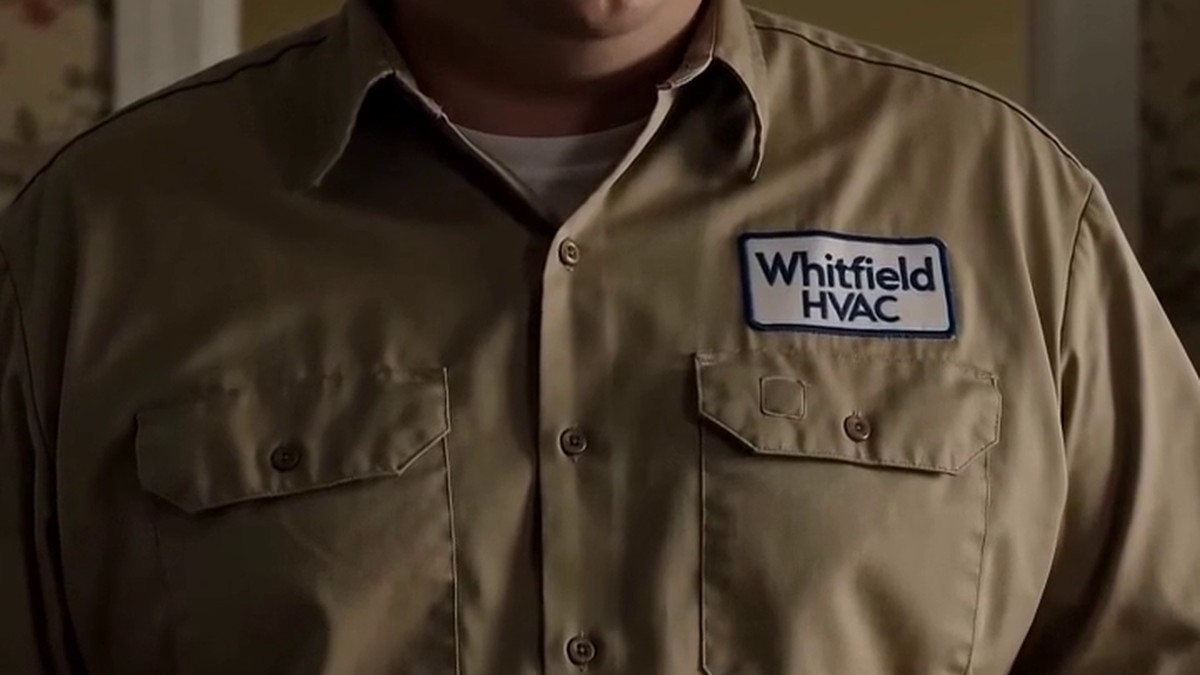
I married her daughter Kayla four years ago. I run a small HVAC repair business — three trucks, two guys who work for me, a website I built myself at two in the morning more times than I'd like to admit. Denise owns a duplex on Riverside Drive, the kind with the wraparound porch and the ceiling fans that click when they spin. Kayla grew up in the upstairs unit. Denise lives downstairs. When Kayla and I got married, Denise offered us the upstairs unit — rent-free, she said, "as long as you two are figuring things out."
That phrase. As long as you're figuring things out. I didn't understand until much later that it was never a gift. It was a leash with some slack in it.
Here's what nobody outside our family knew: for three years, I paid the property taxes on that duplex. Not rent — taxes. Denise asked me to, the second year, sitting at her kitchen table with a bill from Jefferson County for $2,800, saying her fixed income from Social Security wasn't going to stretch. I said sure. I said sure the year after that too. And the year after that, when it went up to $3,100. I never got a receipt, never asked for one, because she's my wife's mother and because Kayla would look at me like I'd kicked a dog if I brought up money in front of her.
What I noticed, and what I don't think Kayla ever saw, was how Denise talked to me in the kitchen when Kayla wasn't in the room. Different voice. Sharper. "You tracked mud in again." "That truck of yours is an eyesore on my street." Small things. I told myself they were small things.
Then in March, Kayla's older brother Marcus moved back from Nashville — divorced, between jobs, needing somewhere to land. Denise gave him the converted garage apartment out back, no charge, obviously, family helps family. Fine. I actually didn't mind Marcus. He fixed her gutters, he mowed, he showed up.
What changed things was the Thursday in April when Denise called us all — me, Kayla, Marcus — into her kitchen. She had coffee going, the smell of it thick in that low-ceilinged room, and she'd printed something out. A quitclaim deed. She was giving the whole duplex to Marcus. Not splitting it. Not selling it. Signing the building over to him outright, while Kayla and I kept living upstairs as his tenants.
"He needs the stability," she said. "You two are stable already."
I want to be honest about what I felt, because it wasn't rage, not at first. It was that specific, cold drop in your stomach when you realize you've been quietly rezoned from family to tenant and nobody told you the meeting was happening. Kayla went pale. She didn't say anything for a solid ten seconds, and I remember the ceiling fan clicking through every one of them.
I asked, evenly, whether the taxes I'd paid — over $9,000 across three years — would be reflected anywhere in this. Denise waved her hand. "That was help, Danny. Not an investment." Marcus wouldn't look at me. He picked at the label on his coffee mug like it was the most interesting thing in Jefferson County.
Here's the part I'm not proud of, and I'll say it plain: I didn't yell. I got quiet in a way that apparently scared Kayla more than yelling would have. I said, "Okay," and I went upstairs and I got the folder.
Because here's the thing Denise didn't know. When I started paying those taxes, I wasn't naive about it — I'm a business owner, I keep records out of instinct. Every payment went through my business checking account, itemized, with a note in the memo line: "Riverside Dr property tax — R. Whitfield." Three years of bank statements. And more than that: eighteen months earlier, half-joking, half not, I'd had Kayla ask her mother to put something in writing about the taxes "for our records." Denise had scribbled a note on a legal pad — "Danny pays county taxes on 214/214B Riverside, in exchange for continued residence" — and signed it, because at the time it cost her nothing to sign. I'd had it in a drawer for a year and a half. I'd honestly forgotten how much it might matter until that Thursday.
I came back downstairs with the folder and set it on the table next to her printed deed, next to the coffee going cold in Marcus's mug.
"I'm not fighting the deed," I said. "You can give Marcus the building. It's yours to give." Kayla's head turned toward me like she didn't recognize the sentence. "But I'm not paying $3,100 a year in property taxes on a building I don't own, for a landlord who used to be my mother-in-law and is about to be my brother-in-law. That stops today."
Denise said I was being petty. Marcus said, quietly, that he "didn't ask for any of this." That part was probably true, and probably the only honest thing said in that kitchen.
What I did next wasn't a scene. It was three phone calls over the following two weeks. I called the Jefferson County PVA office and confirmed the tax bill would now go to the deed holder — Marcus — starting the next cycle, since I formally notified them in writing that I was the prior payer and would not be continuing. I called our bank and redirected the standing payment I'd set up, closing it out. And I sat down with Kayla, at our own kitchen table upstairs, and told her: we're paying rent from here on, or we're moving. Market rate for that unit in our neighborhood was running about $1,450 a month. Denise, or now technically Marcus, needed to pick one.
Kayla cried. Not for her mother — I think, by the third day, she understood the note on the legal pad better than her mother did. She cried because eleven years of assuming this house was a soft place to land had just ended in one Thursday afternoon.
Marcus came upstairs himself, about ten days later, holding a sheet of paper — his own attempt at a lease, typed up on his laptop, $1,200 a month, first and last. He stood in our doorway not quite meeting my eyes and said his mother had told him the taxes were "handled." He hadn't known any of it until the county's letter showed up addressed to him for $3,100, due in sixty days.
I signed his lease. I didn't gloat, and I didn't bring up the folder again — he'd already seen enough of it at the table. We pay him rent now, on the first of every month, through an app on my phone, receipt and everything. Denise doesn't come upstairs much anymore. When I see her on the porch, she says my name like it costs her something. I say hello back and keep walking to my truck.
Kayla and I are looking at a house near Fern Creek now, something with a yard and no upstairs, no downstairs, no family member holding the deed. We haven't found the right one yet. But I keep that legal pad note in the same folder, in the same drawer, just in case anybody in that family ever forgets again what "figuring things out" was supposed to cost.