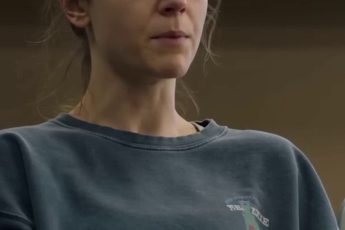
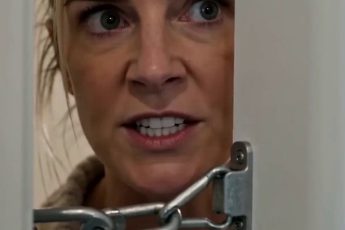
She didn’t cry when she heard his voice.
That was the first thing that broke him.
Emily just froze on the marble floor, brush still in her hand, as if the word “Dad” had been something she wasn’t allowed to say out loud for years. Her eyes didn’t rush to him. They didn’t soften. They just… held distance. Like she was deciding whether this moment was real or another disappointment she had learned to survive.
“Emily…” James whispered again, stepping forward carefully, like he was afraid the air between them would shatter. “It’s me.”
Her lips trembled—but she looked down first, not at him.
At the floor she had been scrubbing.
“I didn’t know you were coming,” she said quietly.
And somehow that hurt more than anger.
Because she didn’t sound surprised.
She sounded prepared.
James looked around the house he built in his mind a thousand times while missing birthdays, school plays, scraped knees, and bedtime stories. Everything was perfect. Too perfect. Cold perfect. Like no one had been allowed to truly live here.
“Where is everyone?” he asked, though part of him already felt the answer tightening in his chest.
Emily gave a small, almost tired smile.
“There is no ‘everyone,’ Dad.”
Silence fell so heavily it felt like it pressed against the walls.
Then footsteps from the hallway.
An older woman appeared, holding a towel in her hands. She stopped when she saw him, eyes widening—not with fear, but with something closer to exhaustion that had lasted too long.
“She stayed,” the woman said simply, looking at Emily instead of him. “Even when nobody else did.”
James felt his throat tighten.
“What do you mean she stayed?” he asked.
Emily finally stood up.
Slowly.
Carefully.
Like her body had forgotten what comfort felt like.
“This house… it doesn’t run itself,” she said. “And people stopped coming to take care of it when you stopped coming back.”
He shook his head, confused.
“I sent money. I built everything so you’d never struggle—”
Emily interrupted him softly.
“That’s the thing, Dad.”
A pause.
A long one.
Then the words that hit him harder than anything he had ever signed or built:
“We didn’t need the house. We needed you.”
His suitcase slipped again, this time forgotten completely.
“I thought I was doing the right thing,” he said, almost helpless now. “I thought I was giving you a better life.”
Emily looked at him then.
Really looked.
And for the first time, he saw it—not just exhaustion, but years of learning how not to ask for help.
“You gave me rooms,” she said quietly. “But not home.”
The silence after that wasn’t empty.
It was full.
Full of missed dinners. Missed calls. Missed years.
James stepped closer, slower this time.
“I didn’t know it got this bad,” he admitted.
Her voice cracked, just slightly.
“You never asked.”
That was the moment he broke—not loudly, not dramatically—but in a quiet way only people who’ve been strong for too long break.
He knelt down on the marble floor beside her.
The same floor she had been scrubbing alone.
And for the first time, he didn’t look like the man who built the house.
He looked like a father who had finally come home too late—and just in time.
“I’m here now,” he said softly. “I don’t know how to fix the years… but I’m here.”
Emily didn’t answer right away.
Then, slowly, she placed the brush down.
Like letting go of something she had carried too long.
“You can’t fix time,” she whispered.
A pause.
“But maybe… you can stay.”
That was all she said.
And somehow, it was everything.
Later that evening, the kitchen light was no longer cold.
It was warm.
Not because anything had changed in the house—but because something had finally changed inside it.
James stood by the counter, awkwardly holding a cup of tea he didn’t remember making. Emily sat at the table, no longer in her cleaning uniform, wrapped in an old soft sweater she found upstairs.
They didn’t talk much at first.
Just small words.
Careful words.
Like learning a language they used to know.
Then, quietly, she asked:
“Do you still remember how to make pancakes?”
And for the first time that day, James smiled like a man who had been given a second chance he didn’t deserve—but was being trusted with anyway.
“I think I still do,” he said.
The pan sizzled.
Flour dust floated in the warm kitchen light.
And Emily, watching him, whispered something so soft he almost didn’t hear it:
“I used to wait for you… every weekend.”
He didn’t turn around.
Because if he did, she would see the tears.
That night, the house didn’t feel empty anymore.
It felt like it was learning how to breathe again.
And for the first time in fifteen years, James didn’t feel like a man who had built something.
He felt like a father trying to rebuild what truly mattered.
Not the mansion.
Not the money.
But the time he thought he still had.
What do you think hurts more—when parents provide everything… except their presence?