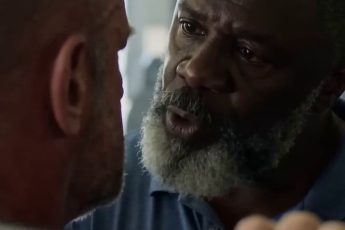
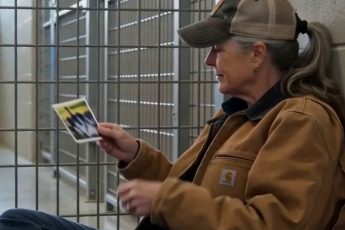
The executive chef stopped so abruptly that he nearly lost his balance.
For a second, nobody moved.
Nobody spoke.
The only sound in Bellamy’s Steakhouse was the soft crackling of the fireplace near the bar and the wind rattling against the tall windows.
Then the chef crossed the room.
Fast.
Too fast for someone who usually carried himself with perfect control.
When he reached Evelyn, his eyes filled with tears.
Real tears.
Not the kind people force.
The kind that surprise even the person crying.
“Miss Carter…”
His voice broke.
“You came.”
The room stared.
Thomas, the maître d’, looked confused.
Charles looked even worse.
Neither of them understood what they were seeing.
The chef swallowed hard and gently took Evelyn’s hands in his.
The same hands everyone had spent the last ten minutes judging.
The same hands roughened by age and years of work.
“You probably don’t remember me,” he whispered.
A soft smile appeared on Evelyn’s face.
“Oh, I remember.”
The chef laughed through tears.
And suddenly he looked less like an award-winning professional and more like a little boy.
A little boy who had once needed someone to believe in him.
Thirty years earlier, long before Bellamy’s became one of Chicago’s most respected restaurants, a sixteen-year-old boy named Michael had been washing dishes in a small neighborhood diner.
His father had left.
His mother worked two jobs.
Money was always short.
Hope was even shorter.
One evening, after everyone else had gone home, he burned an entire tray of pastries.
The owner shouted.
Customers complained.
And Michael sat alone behind the building, convinced he would never amount to anything.
That was the night Evelyn found him.
Not as a customer.
As a waitress finishing her shift.
She sat beside him on an overturned milk crate.
No lectures.
No speeches.
Just quiet understanding.
After a while she handed him half of her sandwich.
“You know,” she said, “the people who become great at something usually fail more than everyone else.”
Michael laughed bitterly.
“I don’t think burning food is part of success.”
“Oh, it absolutely is.”
He remembered every word.
Because nobody had ever spoken to him that way before.
Nobody had looked at him and seen potential instead of problems.
A few months later, when culinary school seemed impossible, Evelyn quietly paid his application fee.
She never told anyone.
Not even him.
He only discovered it years later.
By then she had already moved away.
Life happened.
People drifted apart.
But he never forgot.
And now, standing in the middle of Bellamy’s, he turned toward the dining room.
Toward the people who had laughed.
Toward the people who had judged.
And his voice carried across every table.
“This woman is the reason I’m standing here.”
The room became completely still.
Michael pointed toward the kitchen.
“Every award in that office.”
Toward the dining room.
“Every meal served here.”
Toward himself.
“Every success I’ve had.”
His eyes returned to Evelyn.
“Started because one woman chose kindness when nobody else bothered.”
A woman near the window lowered her gaze.
The guest who had mocked Evelyn earlier suddenly looked ashamed.
Even Thomas seemed unable to meet anyone’s eyes.
But Evelyn simply stood there quietly.
As if none of this surprised her.
As if helping someone had never been a transaction.
Only the right thing to do.
Then came the moment nobody expected.
Michael pulled out a chair at the best table in the restaurant.
The table usually reserved months in advance.
The table overlooking the entire dining room.
He smiled.
“Tonight, this seat belongs to you.”
Evelyn’s eyes filled with tears.
For the first time.
Not because of the insults.
Not because of the embarrassment.
But because kindness has a strange way of returning when we least expect it.
Sometimes after weeks.
Sometimes after years.
Sometimes after decades.
As dinner continued, guests approached her one by one.
Not because she was wealthy.
Not because she was important.
But because they wanted to hear her story.
And perhaps because many of them suddenly remembered someone who had once helped them.
A teacher.
A mother.
A grandmother.
A neighbor.
Someone who had quietly changed their life and never asked for recognition.
Hours later, snow still drifted outside.
The restaurant lights glowed warmly against the dark Chicago streets.
When Evelyn finally stood to leave, Michael walked her to the door.
Neither spoke for a moment.
Then she gently touched his arm.
“I’m proud of you.”
Three simple words.
Yet the chef had to look away.
Because some words heal wounds we carry for years.
As Evelyn stepped into the falling snow, she paused and looked back through the glass.
Inside, people were laughing.
Talking.
Holding loved ones a little closer.
And somehow the restaurant felt different than it had only a few hours earlier.
Warmer.
Softer.
More human.
Because that night everyone learned something important.
You never know whose life has been changed by the person standing quietly in front of you.
And the people who look ordinary often carry the most extraordinary stories.
The snowflakes danced beneath the streetlights as Evelyn disappeared into the winter night.
But the kindness she had planted decades earlier remained glowing behind her like a light that refused to go out.
And perhaps that’s the closest thing we have to leaving a mark on the world.
Not wealth.
Not status.
Not applause.
Just kindness that keeps traveling long after we’re gone.